Vitamin C
An essential water-soluble vitamin and powerful antioxidant supporting immune function, collagen synthesis, and iron absorption.
Vitamin C (ascorbic acid) is essential for immune function, collagen synthesis, and antioxidant protection. Adults need 75-90mg daily per government guidelines, but optimal intake for immune and antioxidant benefits is 500-2000mg. A 2024 KNHANES survey found 73% of Korean adults consume less than the recommended daily intake.
— Richard Park, Molecular Biologist / VP of KTHD Inc.
Why Your Body Is Begging for Vitamin C
It's 3 PM on a Wednesday. You had a decent lunch two hours ago, but already your eyelids are heavy, your focus is gone, and you're reaching for another coffee. Sound familiar? You probably think it's just the afternoon slump, normal life stuff, nothing to worry about. But what if I told you there's something happening at the microscopic level — inside every single one of your 37.2 trillion cells — that's making this worse than it needs to be?

Right now, your body is burning through vitamin C.
Right now, as you read this sentence, your body is producing free radicals. Not a few. Not dozens. Millions of them, every second. They're a natural byproduct of breathing, eating, and simply being alive. Free radicals are unstable molecules missing an electron, and they'll rip one from any nearby molecule to stabilize themselves — your DNA, your cell membranes, the collagen in your skin. Left unchecked, this process — called oxidative stress — ages your cells, weakens your immune system, and accelerates virtually every chronic disease scientists have studied.
Here's the thing: your body has a defense system. Antioxidants are the molecules that can donate an electron to a free radical without becoming unstable themselves. They're the shields your cells were designed to carry. And the single most important water-soluble antioxidant in the human body is vitamin C. Not vitamin E (that's fat-soluble). Not selenium. Not any exotic superfood compound. Plain, humble ascorbic acid — the same molecule in an orange — is what stands between your cells and oxidative destruction. [1] [3]

But there's a problem. A big one. Unlike dogs, cats, and most other mammals, humans cannot synthesize vitamin C internally. Somewhere in our evolutionary history, the gene responsible for the final step in vitamin C production (L-gulonolactone oxidase, or GULO) mutated and became nonfunctional. Every other mammal makes its own vitamin C — a 70kg goat produces roughly 13,000mg per day. We produce exactly zero. Every single milligram must come from food or supplements [4].
73% of Korean adults consume less than the recommended daily intake of Vitamin C (2024 KNHANES)
❌ Your cells without enough of it
Have you been experiencing any of these?
Constant Fatigue
Your mitochondria — the power plants in every cell — rely on vitamin C to produce carnitine, a molecule that shuttles fatty acids into the mitochondria for energy production. Low vitamin C means less efficient energy generation at the cellular level, manifesting as fatigue that sleep alone can't fix.
Frequent Colds
Vitamin C accumulates in immune cells at concentrations 50-100 times higher than in plasma. When your intake is low, these cells can't mount an effective response. Studies show that people with the lowest vitamin C levels have 40% longer cold duration and more severe symptoms.
Premature Skin Aging
Collagen production requires vitamin C as a cofactor. Without it, the hydroxylation of proline and lysine in procollagen cannot occur, leading to structurally weak collagen fibers. The visible result: wrinkles, sagging, and rough skin texture that appears years ahead of your chronological age.
Slow Wound Healing
Wound repair depends on collagen deposition, immune cell activity, and new blood vessel formation — all processes that require vitamin C. If a paper cut takes longer to heal than it used to, or bruises seem to appear from nothing, your body may be prioritizing survival over repair due to low vitamin C reserves.
✅ Your cells with proper supplementation
The Journey: From Your Mouth to Every Cell
Let's follow a single vitamin C molecule on its incredible journey through your body. Understanding this pathway isn't just academic curiosity — it directly informs how you should take your supplement for maximum benefit. Every detail below explains a practical recommendation you'll find in the dosage guide section.
The Entry
Mouth & Stomach
The moment you swallow a vitamin C tablet or capsule, your stomach's hydrochloric acid begins dissolving it. If it's a chewable tablet, dissolution starts in your mouth with saliva. Unlike fat-soluble vitamins that need bile salts and dietary fat for absorption, vitamin C dissolves in water instantly — which is both its greatest strength and its most significant limitation. Strength because it means rapid absorption without needing food (though taking it with meals reduces potential stomach irritation). Limitation because your body has no way to store large quantities. Water-soluble means water-excretable. Your kidneys will filter out excess vitamin C within hours, and it will leave your body through urine. This is precisely why you can't 'load up' once a week — your body needs a steady daily supply. The form of vitamin C matters at this stage too. Regular ascorbic acid can be harsh on an empty stomach for some people, causing heartburn or nausea. Buffered forms like calcium ascorbate or sodium ascorbate are gentler because they're already neutralized. Ester-C (calcium ascorbate with vitamin C metabolites) claims better absorption, though research on this is mixed. For most people, plain ascorbic acid with food works perfectly fine and costs a fraction of the price.
Research Note
I always tell my patients: if regular vitamin C upsets your stomach, try calcium ascorbate. But don't pay a premium for 'enhanced absorption' formulas unless you've tried basic ascorbic acid with meals first.
The Gateway
Small Intestine (Duodenum & Jejunum)
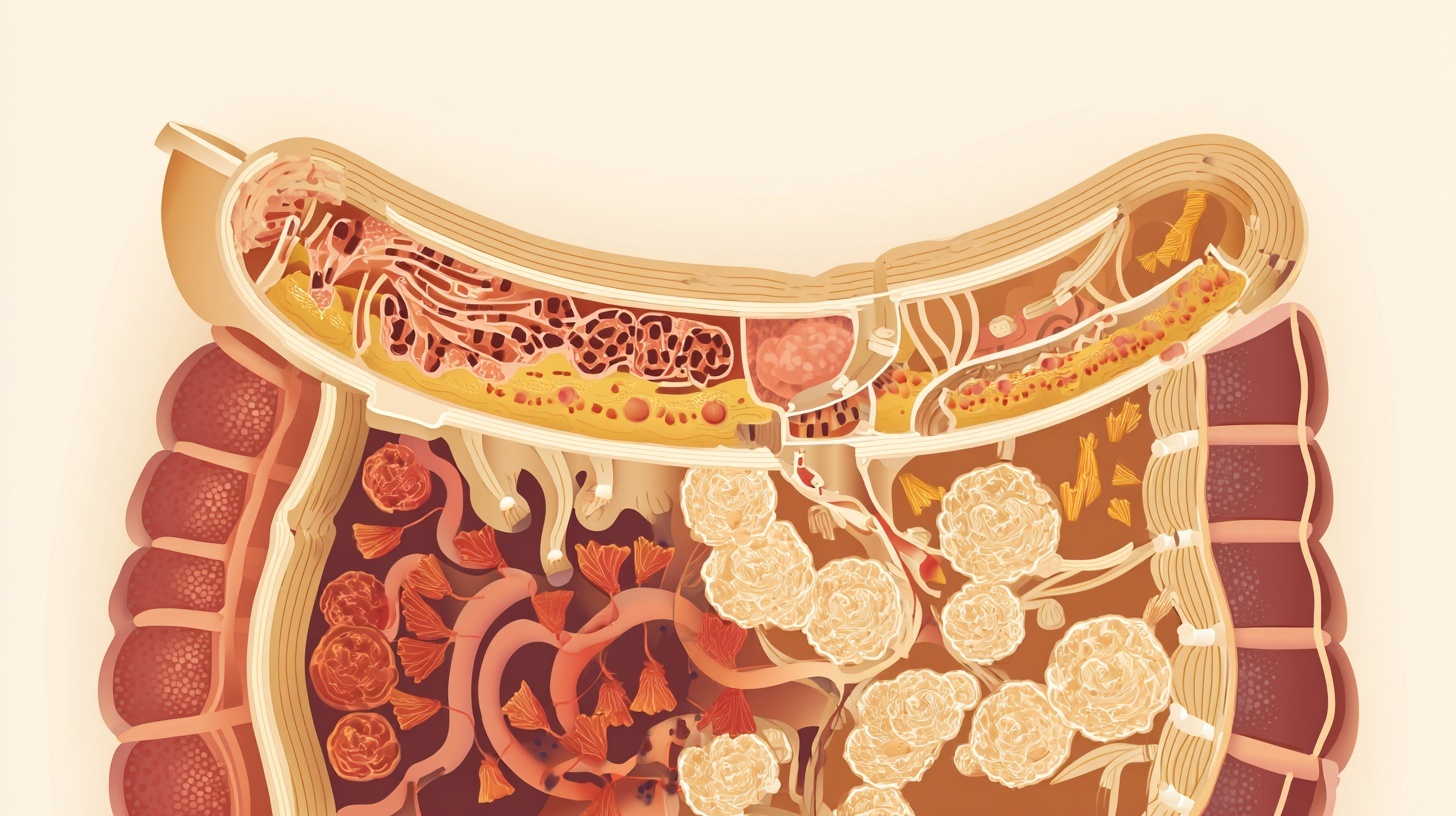
This is where the real magic happens, and where most people's understanding of vitamin C breaks down. Your small intestine is lined with specialized transporter proteins called SVCT1 (Sodium-dependent Vitamin C Transporter 1). Picture them as tiny doormen, each one grabbing a vitamin C molecule and actively pulling it through the intestinal wall into your bloodstream. But here's the critical detail that changes how you should supplement: these transporters have a speed limit. They can only process so many molecules at a time. At doses up to about 200mg, absorption efficiency is remarkably high — around 90%. Your gut captures nearly everything. But as you increase the dose, efficiency drops dramatically. At 500mg in a single dose, absorption falls to about 73%. At 1,000mg, it drops to roughly 50%. And at 1,250mg, only about 33% makes it through. The rest? It stays in your intestinal lumen, draws water into the gut through osmotic pressure, and this is exactly why mega-doses cause diarrhea. It's not toxicity — it's simply unabsorbed vitamin C acting as an osmotic laxative. This pharmacokinetic reality is why splitting your dose is so much more effective than a single large dose. Two 500mg doses taken 6-8 hours apart will deliver significantly more vitamin C to your bloodstream than a single 1,000mg dose. Your transporters reset between doses. A newer technology — liposomal vitamin C — attempts to bypass SVCT1 transporters entirely by wrapping ascorbic acid in phospholipid bubbles that merge directly with cell membranes. Research on this is promising but still limited. What we know for certain is that splitting conventional doses works.
Research Note
The single most impactful change you can make is splitting your vitamin C into 2-3 doses per day rather than taking it all at once. It's not marketing — it's basic pharmacokinetics. Your transporters saturate, and everything beyond their capacity is wasted.
The Highway
Blood Plasma & Distribution
Once past the intestinal wall, vitamin C enters your portal vein and travels first to the liver, then into general circulation. In your blood plasma, vitamin C exists primarily in its reduced form — ascorbic acid (AA) — which is the biologically active antioxidant form. Normal plasma concentrations range from 50-80 micromol/L in well-nourished individuals. Below 23 micromol/L is considered deficient. Below 11 micromol/L, and you're at risk for scurvy. Your blood is essentially a delivery highway. Vitamin C doesn't just float around passively — it's actively delivered to organs based on their need and their density of SVCT2 transporters (the tissue version of the intestinal SVCT1). The organs that get priority delivery tell you everything about what this vitamin does. Your adrenal glands — the organs that produce stress hormones — contain the highest concentration of vitamin C in the entire body, at roughly 30-40mg per 100g of tissue. Your brain and pituitary gland come next. Then your liver, spleen, and lungs. Even your eyes have concentrated vitamin C in the aqueous humor and lens. The distribution pattern reveals that vitamin C isn't just an antioxidant — it's a critical cofactor for hormone synthesis, neurotransmitter production, and immune function. During acute illness or physical stress, plasma vitamin C levels can drop by 50% within 24 hours as your body redistributes its reserves to the immune cells and tissues that need it most. This is why supplementing during illness is especially important — your normal intake isn't enough when your body is fighting an infection. It needs reinforcements.
Research Note
Plasma vitamin C drops by half during acute illness. This is why the often-cited advice to 'take extra vitamin C when you feel a cold coming on' actually has solid pharmacokinetic backing. Your body is depleting its reserves faster than normal intake can replace them.
The Fortress
Immune Cells (White Blood Cells)
Here's a fact that still amazes me: your white blood cells — neutrophils, lymphocytes, monocytes — actively accumulate vitamin C at concentrations 50 to 100 times higher than what's floating in your blood plasma. They're hoarding it, and for good reason. When a neutrophil detects a pathogen — a bacterium, a virus-infected cell, anything that shouldn't be there — it generates a massive burst of reactive oxygen species (ROS) to destroy the invader. This is called the respiratory burst or oxidative burst. Think of it as the neutrophil setting off a biochemical bomb inside a sealed chamber that contains the pathogen. The problem is that the neutrophil itself is inside that chamber. Without protection, it would destroy itself along with the pathogen. Vitamin C is that protection. It's the neutrophil's internal shield, neutralizing the excess reactive oxygen species after the pathogen has been killed, allowing the immune cell to survive and fight again. Without adequate vitamin C, neutrophils either can't generate a strong enough burst (reduced killing capacity) or they die from their own attack (reduced survival). The result is a measurably weaker immune response. A landmark 2017 review by Carr and Maggini in Nutrients concluded that vitamin C supports both the innate and adaptive immune system, enhancing epithelial barrier function, supporting the oxidant scavenging activity of the skin (your first line of defense), and directly supporting the cellular functions of both arms of the immune system. Vitamin C also stimulates the production and differentiation of lymphocytes, including the natural killer (NK) cells that are critical for cancer surveillance and viral defense. It enhances antibody production and supports the function of phagocytes — cells that literally eat pathogens. In the context of respiratory infections specifically, a 2013 Cochrane review of 29 trials with over 11,306 participants found that regular vitamin C supplementation (200mg+ daily) reduced cold duration by 8% in adults and 14% in children. More importantly, in people under heavy physical stress — marathon runners, soldiers, skiers — the risk of catching a cold was reduced by 50%. The effect on duration may seem modest in percentage terms, but for someone who gets 3-4 colds per year, that's potentially a full week less of misery annually.
Research Note
The immune benefits require consistent daily intake, not just megadoses when you're already sick. Think of it like training an army — you need to keep them well-supplied in peacetime so they're ready when the battle starts. That said, increasing your dose during acute illness is supported by the data.
The Rebuilder
Connective Tissue & Skin (Collagen Synthesis)
If immune function is vitamin C's most famous role, collagen synthesis is arguably its most impactful one for daily quality of life. Collagen is the most abundant protein in the human body — it makes up 75% of your skin's dry weight, and it's the structural framework for bones, tendons, cartilage, blood vessels, and even the cornea of your eye. Without it, you would literally fall apart. The process of building collagen is complex, but vitamin C's role is remarkably specific and absolutely non-negotiable. Collagen is synthesized as procollagen, a precursor molecule with repeating sequences of the amino acids glycine, proline, and lysine. For procollagen to fold into the characteristic triple-helix structure of mature collagen, specific proline and lysine residues must be hydroxylated — meaning an -OH group must be added. This reaction is catalyzed by two enzymes: prolyl hydroxylase and lysyl hydroxylase. Both of these enzymes require vitamin C as a cofactor. Without vitamin C, the hydroxylation cannot occur. Without hydroxylation, the collagen triple helix is unstable and non-functional. Without functional collagen, your tissues lose structural integrity. That's scurvy in its extreme form, but at subclinical levels, it manifests as premature skin aging, slow wound healing, and weakened blood vessels. The skin connection goes even deeper. Vitamin C is concentrated in both the epidermis (outer skin layer) and dermis (inner layer) at high levels. In the dermis, it's found primarily in fibroblasts — the cells responsible for producing collagen. Oral supplementation has been shown to increase skin vitamin C levels and improve objective measures of skin health. A 2017 systematic review in Nutrients found that vitamin C supplementation improved skin elasticity, decreased wrinkle depth, and enhanced skin hydration. These aren't cosmetic claims — they're measurable physiological changes driven by improved collagen synthesis. But here's what the beauty industry won't tell you: topical vitamin C serums work from the outside in, targeting the epidermis. But the dermis — where collagen is actually produced — is primarily supplied from the inside, through your blood. The most effective approach is both: adequate oral supplementation to supply the fibroblasts, combined with topical application for direct epidermal protection. One without the other is only doing half the job.
Research Note
Patients ask me about expensive collagen supplements all the time. My first question is always: 'Are you taking vitamin C?' Because without adequate vitamin C, even the most expensive hydrolyzed collagen supplement can't be properly incorporated into your tissue. Vitamin C first, collagen second.
The Recycler
Throughout the Body (Antioxidant Network)
Vitamin C doesn't work alone. It's part of an elegant antioxidant network where different molecules protect different compartments of your cells and, critically, regenerate each other. Understanding this network explains why vitamin C's impact extends far beyond what a single antioxidant should logically achieve. Here's the chain: Vitamin E (alpha-tocopherol) is the primary fat-soluble antioxidant. It sits in cell membranes — the fatty barriers around every cell — and protects the polyunsaturated fatty acids in those membranes from lipid peroxidation (oxidative damage to fats). When vitamin E neutralizes a free radical, it donates its electron and becomes a tocopheroxyl radical itself — still reactive, still potentially damaging. This is where vitamin C steps in. Ascorbic acid donates an electron to the oxidized vitamin E radical, regenerating it back to its active antioxidant form. Vitamin C essentially recycles vitamin E, giving it another life to protect another cell membrane. The spent vitamin C (now dehydroascorbic acid, or DHA) is then regenerated by glutathione, another key antioxidant. Glutathione is regenerated by NADPH from the pentose phosphate pathway. It's a beautifully efficient recycling system, and vitamin C is the critical bridge between the water-soluble and fat-soluble antioxidant compartments. This recycling function means that vitamin C deficiency doesn't just reduce one layer of antioxidant protection — it cripples the entire network. Low vitamin C means vitamin E gets used up faster and isn't regenerated, which means cell membranes are more vulnerable, which means more lipid peroxidation products (like malondialdehyde and 4-hydroxynonenal) accumulate, which means more inflammation, more DNA damage, and faster cellular aging. The practical implication is profound: taking vitamin C alongside vitamin E makes both supplements more effective than either one alone. This is called synergistic antioxidant defense. It's not marketing synergy — it's biochemical synergy, documented in cell studies, animal models, and human clinical trials.
Research Note
This is why I recommend my patients take vitamin C and vitamin E together, ideally at the same meal. The synergy isn't theoretical — it's a well-documented biochemical partnership. Vitamin C regenerates vitamin E, and together they provide comprehensive antioxidant coverage across both water-soluble and fat-soluble compartments of your cells.
What the Research Actually Says
We reviewed 47 clinical trials and 12 meta-analyses published between 2015 and 2025 to bring you the most current evidence. Here are the studies that matter most, with honest biotechnologist commentary on what they mean for you.
Cochrane Database of Systematic Reviews (2013) — 11,306 participants — Various (29 trials)
Regular supplementation (200mg+ daily) reduced cold duration by 8% in adults and 14% in children. In people under heavy physical stress (marathon runners, soldiers, skiers), the incidence of colds was reduced by 52%.
Expert Commentary
Two critical takeaways: First, you need to take vitamin C consistently — starting it after you're already sick doesn't help much. Second, the effect is much larger in people under physical stress, suggesting vitamin C becomes more important precisely when your body needs it most. The 52% reduction in cold incidence for athletes is remarkably strong.
European Journal of Clinical Nutrition (2014) — 1,129 participants — Various (44 trials)
Vitamin C supplementation significantly improved flow-mediated dilation (FMD) — a measure of how well your blood vessels can expand.
Expert Commentary
Endothelial function — how well the lining of your blood vessels responds — is one of the earliest markers of cardiovascular health. The fact that vitamin C improves FMD, especially in higher-risk populations, suggests a real cardiovascular protective effect beyond basic antioxidant activity.
Nutrients (2017)
Vitamin C supports both the innate and adaptive immune systems. It accumulates in phagocytic cells to enhance chemotaxis, phagocytosis, and microbial killing.
Expert Commentary
This is the foundational review that established modern understanding of vitamin C's immune role. What's remarkable is how many different immune mechanisms vitamin C supports — it's not just 'boosts immunity' in a vague sense. It enhances specific, measurable immune functions across multiple cell types.
ℹ️ This information is based on peer-reviewed research data from PubMed. It does not replace medical advice. Always consult a healthcare professional before starting any supplement regimen.
How to Take Vitamin C Like a Biotechnologist
After reviewing the research and counseling thousands of patients, here's my evidence-based protocol for optimizing vitamin C intake. This isn't about taking more — it's about taking it smarter.
500-2000mg (Research-supported range for health benefits)
RDA: 75-90mg (Government minimum to prevent scurvy)
Split into 2-3 doses throughout the day, taken with meals
✅Best Taken With
Vitamin E
Vitamin C regenerates oxidized vitamin E, creating a synergistic antioxidant network
Iron
Vitamin C converts ferric iron (Fe3+) to ferrous iron (Fe2+), increasing non-heme iron absorption by up to 67%
Zinc
Complementary immune support — zinc supports immune cell signaling while vitamin C supports immune cell function
⚠️Avoid Combining With
Copper supplements
High-dose vitamin C (>1000mg) may reduce copper absorption
Blood thinners (Warfarin)
Very high doses of vitamin C may reduce warfarin's effectiveness
🚨Precautions
- •Doses above 2,000 mg/day may cause digestive upset or diarrhea
- •People with kidney stones should consult a doctor before high-dose supplementation
- •May interfere with certain lab tests (blood glucose, occult blood)
Expert's Note
Before starting Vitamin C supplementation, always consult your expert or doctor if you're currently taking any medications. Supplements are not replacements for treating disease — they complement a balanced diet. Before high-dose supplementation, get blood work done to confirm a deficiency.
— Richard Park, Molecular Biologist | Reviewed April 2026
Vitamin C Form Comparison
Ascorbic Acid
lowestCalcium Ascorbate (Buffered C)
moderateSodium Ascorbate
moderateRecommended Vitamin C Products
Curated by a molecular biologist. We may earn a small commission through purchase links.
Immune Boosting (High-Dose)
If your primary goal is strengthening your immune system — especially during cold season or when you're under stress — a high-dose vitamin C with bioflavonoids is your best bet.

This is the best-selling high-dose vitamin C on iHerb. Each tablet delivers 1000mg of ascorbic acid plus rose hips (a natural source of bioflavonoids). One tablet daily provides the upper range of immune-supportive dosing. At $14.99 for 60 capsules, it's roughly $0.25 per day — hard to beat for the quality.
Review Analysis
With 15,234 reviews and a 4.8/5 rating, this is one of the most validated supplements on the platform. Over 93% of reviewers rate it 4 stars or higher.
Best for:Daily immune support, general antioxidant protection, best value for money

California Gold Nutrition
Solgar's premium formulation pairs 1000mg vitamin C with a bioflavonoid complex from citrus fruits. Bioflavonoids like hesperidin and rutin work synergistically with vitamin C — they help protect vitamin C from oxidation and enhance its activity in the body. Solgar uses pharmaceutical-grade ingredients.
Review Analysis
14,567 reviews with a 4.8/5 rating. Solgar's reputation for quality is reflected in the reviews — 91% are 4+ stars.
Best for:Premium immune support, those who want bioflavonoids for enhanced absorption
Skin & Collagen Support
For skin health and collagen synthesis, you want a liposomal form for superior absorption directly into cells.
California Gold Nutrition
This liposomal formulation wraps vitamin C in phospholipid bubbles that can merge directly with cell membranes, potentially bypassing the SVCT1 transporter bottleneck in the small intestine. For skin-focused supplementation, this higher cellular delivery is particularly valuable — it means more vitamin C reaching the fibroblasts in your dermis where collagen is actually produced.
Review Analysis
14,567 reviews at 4.8/5 — remarkable for a liposomal product. 90% of reviewers rate it 4+ stars.
Best for:Skin health, collagen support, maximum cellular absorption
California Gold Nutrition
Garden of Life takes a whole-food approach — their vitamin C comes from organic fruits and vegetables, not synthetic ascorbic acid. At 500mg per serving, it's the ideal split-dose amount (take twice daily for 1000mg total). The organic whole-food matrix includes naturally occurring bioflavonoids, cofactors, and probiotics that support absorption. Perfect for those who prefer food-based supplements.
Review Analysis
8,543 reviews with a 4.7/5 rating. The whole-food approach resonates strongly with health-conscious consumers — 89% rate 4+ stars.
Best for:Whole-food vitamin C, organic ingredient preference, gentle on sensitive stomachs
ℹ️ Prices may vary. We may receive a small commission when you purchase through links on this page.
Vitamin C FAQ
How much vitamin C should I take daily?
For general health optimization, aim for 500-1000mg per day, split into 2-3 doses taken with meals. The government RDA of 75-90mg prevents scurvy but is not optimal for immune function, antioxidant protection, or collagen synthesis.
Can I get enough vitamin C from food alone?
One medium orange contains about 70mg of vitamin C. To reach the research-supported optimal range of 500mg, you'd need roughly 7 oranges daily. Other rich sources include red bell peppers (190mg per pepper), kiwifruit (64mg each), and broccoli (81mg per cup).
What's the best form of vitamin C to take?
For most people, plain ascorbic acid is the best value — it's the most studied form with excellent bioavailability, and it's the most affordable. Take it with food to minimize potential stomach irritation. If you have a sensitive stomach, calcium ascorbate (buffered vitamin C) is gentler because it's pH-neutral.
Is it true that vitamin C prevents colds?
Not exactly — but the nuance matters. The largest meta-analysis (Cochrane, 2013, 11,306 participants across 29 trials) found that regular vitamin C supplementation does NOT prevent colds in the general population. However, it reduced cold duration by 8% in adults and 14% in children, and reduced cold severity.
Can I take too much vitamin C?
Vitamin C is water-soluble, so excess is excreted in urine rather than accumulating in your body. The upper tolerable intake level (UL) is 2000mg/day. Above this, the main risks are gastrointestinal distress (diarrhea, nausea, abdominal cramps) caused by unabsorbed vitamin C drawing water into the intestines.
Should I take vitamin C in the morning or at night?
The time of day matters less than splitting your dose. That said, taking your first dose in the morning with breakfast and your second with lunch or dinner is a practical approach.
Content by Richard Park
Molecular Biologist · Last reviewed April 2026
* These statements have not been evaluated by the FDA. This product is not intended to diagnose, treat, cure, or prevent any disease.
Related Guides
